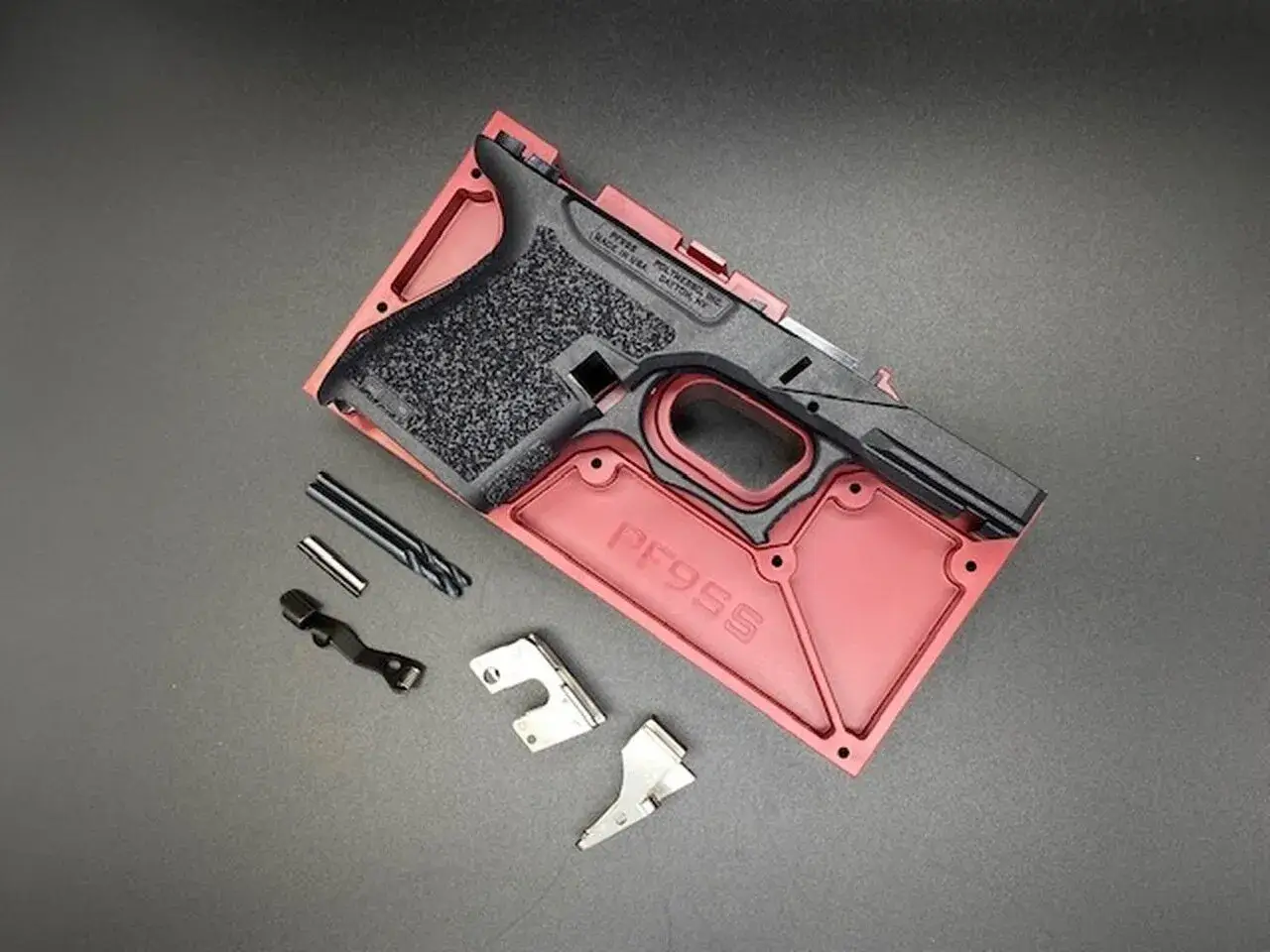
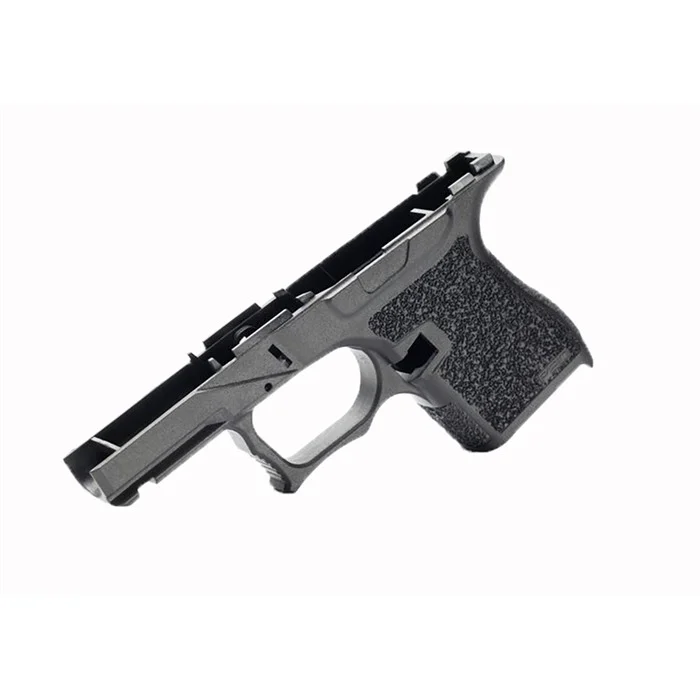
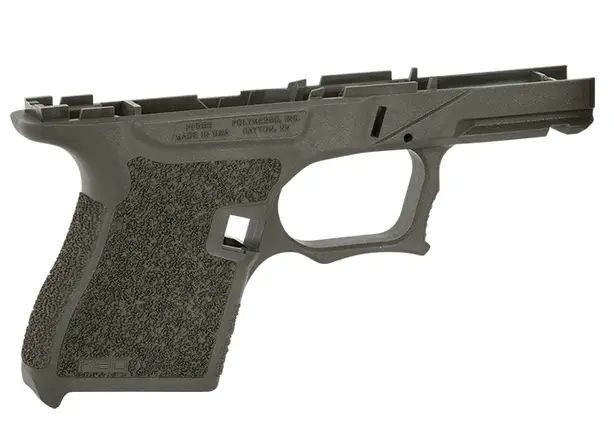
Rail tabs, barrel block, pin holes: the three cuts on a Polymer80 frame
Every PF940-series frame ships with the same three areas left unfinished, and the jig exists to locate all three. Understanding what each cut does makes the work calm instead of nervous.
The pin holes
Three holes: trigger pin, trigger housing pin and locking block pin. The jig has hardened guides for each. Drill with the 3 mm bit, from one side only, straight through the jig. A wandered hole is the one mistake that cannot be filed out, so this is the cut to take slowly and with the jig clamped square.
The rail tabs
Four small polymer tabs, two front and two rear, that sit where the steel rail modules will go. They are removed to the jig surface with the 9 mm end mill in a drill, or with a file alone if you prefer. Their only job is to hold the rail modules at the right height, so the finish surface must be flat, not just low.
The barrel block
The raised section at the front of the frame, ahead of the locking block. It is cut down to the jig line so the barrel and slide can move. This cut controls slide fit more than any other; leave it a hair proud and dress it with the file while test-fitting the slide.
Order and tools
Pin holes, then tabs, then barrel block. A drill, a vise, a flat file and safety glasses. Cutting oil helps the end mill and keeps the polymer from melting onto the flutes. Budget an evening, and expect the second frame to take half the time.